Tuesday, December 8, 2009

Orders of battle for Sacile

Before giving an account of the game, here is an order of battle to allow a better idea of what I am going to be rambling about...


Army of Inner Austria

Armee Kommandant:
General der Kavallrie Erzherzog Johann

Generalstabschef:
Oberst Laval Graf Nugent von Westenrath

Artilleriedirektor:
GM Anton Freiherr von Reisner


VIII Korps: FML Johann Marquis de Chasteler
Generalstabschef: Oberstleutnant Ignaz Reinisch
Artilleriedirektor: Major Johann Freiherr von Fasching


Division: FML Albrecht Graf Guylai

Brigade: GM Heironymous Graf von Colloredo-Mansfeld
IR27 'Graf Strassoldo' 3 Battalions
IR61 'St Julien' 3 Battalions
Brigade Battery 8 3lb

Brigade: GM Peter Chevalier Marechal de Berelat
IR26 'Graf Hohenlohe-Bartenstein' 3 Battalions
IR16 'Graf Lusignan' 3 Battalions
Brigade Battery 8 3lb

Brigade: GM Anton von Gajoli
IR53 'Johann Jellacic' 1st and 2nd Battalions
IR62 'Franz Jellacic' 3 Battalions
Brigade Battery 8 3lb

Division: FML Johann Maria Frimont de Palota

Brigade: GM Joseph von Wetzel
GzIR10 '1st Banal' 2 Battalions
9th Jager 1 Battalion
ChlR2 'Graf Hohenzollern' 8 Squadrons
Cavalry Battery 6 6lb

Brigade: GM Josef Freiherr von Schmidt
HusR5 'Ott' 6 Squadrons
Cavalry Battery 6 6lb

Corps Artillery
Position Battery 4 6lb, 2 Howitzers
Position Battery 4 12lb, 2 Howitzers
Brigade Battery 8 3lb
Position Battery 4 12lb, 2 Howitzers
(Transferred from IX Korps)
Position Battery 4 6lb, 2 Howitzers
(Transferred from IX Korps)
Position Battery 4 6lb, 2 Howitzer
(Transferred from IX Korps)


IX Korps: FML Ignaz Graf Guylai
Generalstabschef: Oberstleutnant Karl Habermann

Artilleriedirektor: Oberstleutnant Johann Freiherr von Calot

Division: FML Franz Gorup von Besanez

Brigade: GM Vitalis von Kleinmayer
IR43 'Simbschen' 3 Battalions
IR13 'Reisky' 3 Battalions
Brigade Battery 8 3lb

Brigade: GM Franz von Marziani
IR52 'Erzherzog Franz Karl' 3 Battalions
IR19 'Alvintzy' 3 Battalions
Brigade Battery 8 3lb

Division: FML Christian Freiherr Wolfskeel von Reichenberg
Brigade: GM Ignaz Freiherr von Splenyi
HusR9 'Frimont' 8 Squadrons
HusR2 'Erzherzog Josef' 6 Squadrons
Cavalry Battery 6 6lb

Brigade: GM J0hann Kalnassy von Kalnass (Transferred from Besanez’ Division)
GzIR3 'Oguliner' 2 Battalions
GzIR4 'Szluiner' 2 Battalions
Grenz Brigade Battery 8 3lb

Corps Artillery
Brigade Battery 8 6lb
Grenz Brigade Battery 8 3lb

Armee Avantgarde: Oberstleutnant Volkmann

DR5 'Savoyen' 6 Squadrons
GzIR11 '2nd Banal' 2 Battalions
HusR5 'Ott' 2 Squadrons
HusR2 'Erzherzog Josef' 2 Squadrons
IR53 'J Jellacic' 3rd Battalion (4 coys only)


Army Reserve: Under Archduke John

Brigade: GM Josef Freiherr Hager von Altensteig
Salomon Grenadiers 1 Battalion (6 coys)
Janusch Grenadiers 1 Battalion (6 coys)
Chimani Grenadiers 1 Battalion (4 coys)
Muhlen Grenadiers 1 Battalion (4 coys)
DR2 'Hohenlohe' 6 Squadrons
Cavalry Battery 6 6lb
Brigade Battery 8 3lb

-------------------------------------------------------------------------------------------


Armee d'Italie

Prince Eugene de Beauharnais

Etat Major:
General de Division Charpentier

Commander in Chief Artillery:
General de Division Comte Sorbier


Division: GdeD Seras

Brigade: GdeB Garreau
35e Ligne 4 Battalions
53e Ligne 4 Battalions

Brigade: GdeB Roussel
106e Ligne 4 Battalions

Divisional Artillery
Comp a Pied 4 8lb, 2 Howitzers
Comp a Pied 4 4lb, 2 Howitzers
Division: GdeD Severoli

Brigade: GdeB Bonfanti
1st Italian Line Regiment 4 Battalions
2nd Italian Line Regiment 1 Battalion

Brigade: GdeB Peyri
7th Italian Line 3 Battalions
Dalmatian Regiment 2 Battalions
1st Italian Chasseur a Cheval 1 Squadron

Divisional Artillery
Italian Comp a Pied 4 6lb, 2 Howitzers
Division: GdeD Grenier

Brigade: GdeB Abbe
1eme Legere 4th Battalion
1eme Ligne 4 Battalions
Napoleone Dragoons (Italian) 1 Squadron

Brigade: GdeB Teste
52e Ligne 4 Battalions
102e Ligne 4 Battalions

Divisional Artillery
Comp a Pied 4 8lb, 2 Howitzers
Comp a Pied 4 4lb, 2 Howitzers


Division: GdeD Broussier

Brigade: GdeB Dessaix
9e Ligne 4 Battalions
24e Dragoons 1 Squadron

Brigade: GdeB Dutruy
84e Ligne 4 Battalions
92e Ligne 4 Battalions

Divisional Artillery
Comp a Pied 4 8lb, 2 Howitzers
Comp a Pied 4 4lb, 2 Howitzers

Division: GdeD Barbou

Brigade: GdeB Moreau
8e Legere 3rd and 4th Battalions
18e Legere 3rd and 4th Battalions
5e Ligne 3rd and 4th Battalions
11e Ligne 4th Battalion

Divisional Artillery
Comp a Pied 4 8lb, 2 Howitzers
Comp a Pied 4 4lb, 2 Howitzers
Cavalry Division: GdeD Sahuc

Brigade: GdeB Pages
6e Hussards 4 Squadrons
6e Chasseur a Cheval 4 Squadrons
8e Chasseur a Cheval 4 Squadrons
25e Chasseur a Cheval 4 Squadrons

Army Artillery
Comp a Pied 6 12lb, 2 Howitzers

Saturday, December 5, 2009

Orders For Sacile


The battlefield

Instead of issuing orders I decided to produce instead a long-winded Army Disposition in traditional Austrian Style. So here is the one for Sacile...


Armee Dispositionskarte


General Opinion

The Army of Inner Austria will continue to advance in order to establish itself along the river Tagliamento. There the army will halt and form a defensive cordon and await events in Bavaria. Every effort will be made to stimulate uprisings among the local population against the French and their puppet Kingdom if Italy. Rumblings of this are already evident in the Tyrol, where local disturbances are already taking place against their hated Bavarian overlords.


The events at Pordenone 15th April

On the 15th April, our Avantgarde force under FML Frimont clashed with a French force at the village of Pordenone. After a brief action our forces surrounded the village, drove off the French cavalry and took all the infantry prisoner, including the Eagle and the Colonel. Our forces continued their advance and FML Frimont occupied the villages of Palse, Porcia and Talponedo, Also, a second light force under Oberstleutnant Volkmann, was despatched to cover the right of the army. Two infantry companies of this force occupied Castello d'Aviano with its important bridge over the Torrente Artagna.


The evening of the 15th April and dawn of the 16th April

As the Avantgarde forces of FML Frimont and Oberstleutnant Volkmann took up their advanced positions the remainder of the army laagered around Pordenone. Our cavalry scouts have assessed enemy strength at five divisions of infantry and some light cavalry. The overnight heavy rains did not unduly disturb our forces. The forces of FML Wolfskeel will march out overnight to Rovereto, ready to commence their march at dawn towards Fontanfredda.


Army Orders Dawn, 16th April


The VIII Korps of FML Chasteler


The forces of FML Chasteler are directed to defend the villages of Porcia and Talponedo to their utmost ability. The village of Palse is considered to be an advanced post that can be abandoned under pressure. The Korps is also directed to occupy the village of Ronche.

In addition to his existing forces, FML Chasteler will be supported by GM von Reisner who will take command of VIII Korps artillery and add the 4th, 5th and 6th Position batteries from IX Korps and pace himself under the command of FML Chasteler. This force is intended to allow VIII Korps to reduce the village of Fontanfredda in preparation for assault by IX Korps.

The general role of VIII Korps is to absorb and repulse any French attacks from either Sacile or up road towards Palse.


IX Korps of FML I. Guylai


The IX Korps of FML Guylai is to leave Pordenone in the direction of Rovereto. This force is then to turn in the direction of Fontanfredda along the road from Rovereto. This force is to take position before Fontanfredda with its left wing on Ronche which is to be occupied by FML Chasteler.

The village of Fontanfredda is assumed to have been heavily bombarded by the artillery of FML Chasteler. If it has not time may be taken to allow this to satisfactorily occur. FML Guylai is then directed to commence an assault either side of Fontanfredda with the aim of surrounding the place. The village is only to be directly assaulted if casualties are not expected to be prohibitive.

FML Guylai is to take the Avantgarde forces of Oberstleutnant Volkmann under command as soon as contact is made. This force is directed to cover your right flank.


You are directed to surrender your three Position batteries in Korps Reserve to GM Reisner.


The Brigade of GM von Altensteig is to remain under the hand of GdeK Erzherzog Johann as army reserve.


The forces of GM Kalnassy and GM Splenyi di Mikaldy are to be despatched OVERNIGHT to Rovereto, ahead of the main body of troops under FML Besanez. For this purpose the brigade of GM Kalnassy is to be transferred to the divisional command of FML Wolfskeel who will command the force dedicated to the overnight occupation of Rovereto.


The Avantgarde of Oberstleutnant Volkmann


This force is to advance in an arc covering the front Vignovo-Fontanfredda. This force is to have multiple roles, namely:

  1. To defeat any French cavalry that appears
  2. To unterdict any French troop movements along the Vignovo-Fontanfredda road
  3. To protect the right wing of IX Korps that will be advancing from Rovereto in the direction of Fontanfredda.
  4. If possible, occupy Vignovo and push forces down the Vignovo-Sacile road cutting the French LoC.

The force is to come under the command of FML I. Guylai once contact between these forces are made.


General Observations


  • The French are considerably weaker in cavalry than we are, in both quantity and quality. Use this advantage well, but do not let this situation lull you into risky actions.
  • The majority of our batteries are of 3lb in calibre. These are designed to support infantry attacks and can be prolonged a considerable distance. Do not get bogged down statically with these guns but use their maneouverability.
  • The third battalions of our line infantry regiments are not particularly reliable, so where possible use these units as supports to other, more experienced, battalions.
  • Our large battalions offer a good prospect of attritional advantage over those of the French. Again, use this advantage wisely.

Morning Conference


A morning conference of senior officers will take place at the army headquarters in Pordenone at 6am. At this conference updates of French positions will be assesssed and any amendments to these orders will be given verbally at that conference.


Oberst Laval Graf Nugent von Westmeath

Generalstabschef

Armee von Inneroesterreich


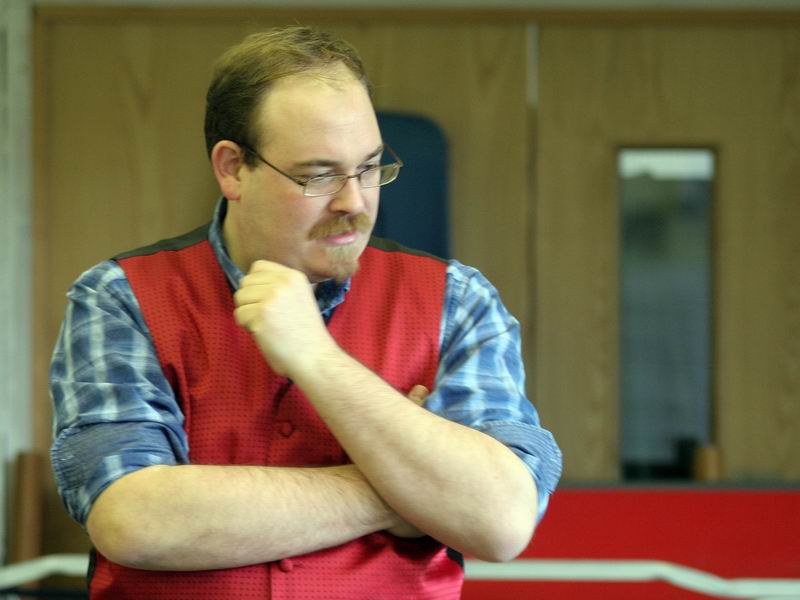
John and Nugent discuss the coming engagement

My 1809


The big year


I have always been an Austrophile. Anyone who has ever read anything I have written about the period will be pretty aware of this. I started my hobby with a 15mm Austrian army and never really looked back. The army itself is pretty average. There are benefits: big infantry battalions, good quality cavalry and reasonable artillery. There are also disadvantages: a very average officer corps, a rather ponderous approach to warfare and army preservation taking precedence over the risks needed to win. On the whole, as an army, nothing will really save you from your mistakes (no show pony leaders, masses of guns or terminally stubborn infantry) but it will not simply crumble no matter what you do.


So I was looking forward to 2009. As a key player in the 200-ers I was looking forward to Austria standing alone and some good 1809 battles. In the end we did three: Sacile, Aspern-Essling and Wagram. Sadly, due to a bereavement, I was unable to make Wagram, where I was due to command. But I commanded and led the whitecoats to victory at both Sacile and Aspern-Essling. I was also looking forward to taking further steps to hammer the 'allied team', especially the younger lads in that group, into a good fighting organisation.

In terms of the scenarios Sacile was my idea. Not a Danubian battle, but a fairly even one in terms of numbers and troop quality with the usual difficulties of terrain that you find in Italy. Although small by the usual 200-er battles in Europe, it is as large as most battles in the Peninsular. It was also going to be a good test-bed for 1809 rules in general, particularly like things for masses, that we had grafted on to Art of Command. I would also get to play my much-maligned namesake: Archduke John.


Aspern-Essling was always going to be a different kettle of fish. Admittedly it was always going to be a tough call for the French, and a decisive French victory was only going to happen if the Austrians were incompetently handled. The French were going to be allowed to change what started over the river and the bridges over the Danube went up and down like a whore's knickers whilst the Austrians were constrained to historical arrival times and entry points.

I will say very little about Wagram as I was not there.


I had also been painting like mad for two years or more, churning out Austrians. The end result was that I had completed all of IV and V Kolonne by the time Aspern-Essling arrived. I was also happy that these Kolonne fell into the hands of two very good players: Tom Burke and Brett Smith. But more of the actual team when it comes to describing the battle. I will include a post before Aspern-Essling with photos of each of the units and generals to give everyone some eye-candy.

The other point to make is that I was already looking to 1813 even as 1809 began. Of course some of the infantry in 1813 would be in helmet, but troops I ordered for Wagram (which never got fielded) all ended up in shako. Not one to plan small, I am now looking at 4 years to do as much of Wittgenstein's Advance Guard as possible: starting with Austrian IV Armee Abteilung and II Prussian Korps. The latter can mostly be made from the excellent Calpe range. But I also have Spanish to complete, some French to polish off and a slow-burning Wurttemberg project. I have also recently been appointed Brunswick for our refight of Auerstadt and want to do the 27 Prussian squadrons from our upcoming battle of Heilbronn (5 done so far...)

K

Monday, September 1, 2008

The Vimeiro Refight


Now, I know as much about the Peninsular War as I know about the back end of the moon. I have never been really interested in playing either the French or the Brits and when I have played Peninsular games I have always pitched for Spanish, Portuguese or KGL commands. Besides, in my book there just is not enough cavalry…

So when it came to the 200-ers refight of Vimiero yesterday I had asked to umpire, as I will happily do for all Peninsular games. This was going to be a new experience for me, as I had not umpired for many years and not with these rules. Art of Command has been continually tweaked anyhow, and in this case we had introduced different methods of handling cavalry, and the charge sequence that I had wanted.

I knew very little about the original battle so I was not going to be too influenced by historical operations.


The Battle

Now, in the first case there will be pictures of this game on the 200-ers website. In the meantime you will have to make do with whatever I can find. Anyhow, the battle was Wellesley’s first engagement in the Peninsular, and we had asked one of our younger players (the Young Guard) to take on the role. Playing Junot was my mate and sparring partner David Ronaldson. As I said to him he was the perfect choice; aggressive and half mad. We had also slightly changed to battle in that Junot was allowed to abandon Lisbon and bring the Division that was there up to join the battle.


This, in a way, was not necessary. The British plan was essentially that of static defence, with a creeping paralysis setting in as the battle progressed, with units only being sent to threatened sectors far too late in the day. The French, on the other hand, had a very maneouverist plan, with Junot prepared to change the emphasis of his attack as the battle progressed. Unsurprisingly it was a very convincing French victory.


Umpiring and the rules


As the game progressed I confess that I found it harder and harder to bite my tongue. The experienced player who was supposed to be playing Murray, Wellington’s QMG, was also playing Hill, and was so fucussed on his own crumbling position that there was no-one who was taking a weather view of the battle. This, I think, was very clear where one British division on the far left could have easily given up a couple of battalions and possibly its battery to reinforce a threatened sector.


But there was also the issue of the rules. Basically we had dealt with the issue of heavy cavalry being used as panzer divisions only to uncover another; the overwhelming power of skirmishers. The British had concentrated the majority of their light troops in a light brigade and this was holding the town of Vimeiro. The rest of the divisions were left with very little light infantry, a few rifle companies and their battalion screens. The French, on the other hand, had plenty of Legere all over the place, and the overall combat results reflected this. In front of Vimeiro, where the British had a superiority of light infantry, the French attack stalled, and then routed, leaving the British in posession of the town. Elsewhere the situation was reversed with the French not having to commit close order troops and instead just skirmished the poorly screened British lines to death. Where the French did commit two columns against the British, they found the one totally fresh line to do it with and the results were very predictable: the French got shot up and retired to their start lines.


What to do?


So this is the next area to consider. What to do about skirmishers. What sort of outcome should they be able to create? Personally I feel this should be few casualties and lots of harassment, and here I think the disorder issue comes in handy.


My initial thought is that for every six, or part of six, skirmishers you simply roll a d6 and get a result. 1-3 nothing, 4-5 one disorder level (or force a redeployment if artillery), 6 a casualty. Against a screened target, target in cover, deployed artillery and so on you need to roll a 6 on a D6 first, and if you get one then roll again for a result. It is pretty easy to divide up the firers and roll a D6 for each. Basically against a screened target you have a 1 in 36 chance of causing a casualty, and a 1 in 18 chance of creating some disorder. Whatever the die roll, only one casualty can be taken by each target per turn and the maximum disorder you can create is ‘Disordered’. Skirmishers themselves can be shot at in the normal way, with possibly an increased minus for firing at them to make firepower casualties a remote possibility.


Battalion screens should be able to screen the battalion. As it stands the battalion light company cannot screen it’s parent line, which seems absurd. So any battalion screen should be able to screen its parent, and only its parent, entirely.


Those are my thoughts so far, I'll keep thinking...


K

Saturday, August 23, 2008

Begorrah’ed


It’s honking…

Here are my first set of Wild Geese, in this case the first battalion of the Irish Regiment of Irlanda. I have not painted a 25mm unit in red before but I must say that I am very happy with the wat that these have turned out.


The unit was part of the first draft sent to Italy which landed at Ortobello in 1741. Irlanda boasted 1,037 men on disembarkation and, along with the Walloon and Swiss, the desertion rate remained fairly low. Conversely the Italian and Spanish units suffered terribly from this, as presumably the men could slip into the civilian population far easier.

How many of the men were actually first generation Irish is hard to say. Certainly of the officers I would have anticipated a high number of Catholic Gentry, denied service in the British army due to their religion, looking to exercise their traditional employment elsewhere. You can find Irish officers serving in Europe in virtually all armies, but clearly France and Austria soaked up many.


But of the rank and file things are far muddier. Although there was no real bar to service placed by the Brits, there were lots of people fishing in the Irish labour pool. For a start there was British army recruitment, they were on the ground and closer. The French, too, had several Irish units on establishment so the Spanish did face considerable competition. I cannot imagine anything more than a small minority of Irish peasantry fired by anti-British feeling to serve with the Bourbons, so I suspect it came down to bounties.


Of course there were second-generation Irish in Spain, scions of the original Wild Geese of the old Pretender, yet there were far less of these in Spain than there were in France. On top of these ‘Irish’ you could add British deserters/prisoners who enlisted during the WAS, but the beneficiary from these can only have been regiment Ultonia (which was not in Savoy either, so was it before Gibraltar?), but Irlanda and Hibernia, isolated in Italy, could not possibly have had this as a source.

So, what? A rag-bag of Germans, Swiss, French and whoever else could be swept up to join some second-generation Irish and whoever the recruiters managed to inveigle into the ranks from Ireland proper.


In terms of painting, well, the red is actually Revell’s Karminrot, with the Blue coming from a navy blue provided by my local art shop, the gaiter colour being Revell Beige and the leatherwork being Revell Braun. It is actually a pleasure to paint something where white is a very small part of the whole, unlike Napoleonics where white breeches and crossbelting are very much the norm.

Next on the stocks are the second battalions of the Lombardia Regiment and the Sardinian Swiss Regiment Diesbach. Also up are some proper Spanish battalion pieces, so pics of them shortly. In the meantime I dedicate this unit to WildGeese on TMP.


K

Tuesday, August 19, 2008

Andere Andere…


The Dons have landed

So here is the first Spanish unit of my Camposanto project. This has been quite a slow-burner whilst I have concentrated on completing IV Kolonne at Aspern-Essling but I managed to get these over the finishing line yesterday evening.

These are the boys from the first battalion of the Lombardia Regiment. It is a classic Spanish National Regiment and, despite its name, is not one of the regiments raised in Italy.


The figures are Front Rank SYW French. As such I chose to accept some minor inaccuracies and a UK based company I have an established relationship with rather than the more accurate but US-based and more questionable castings of the London War Room. So, as can be seen from the rear view the hatmen have swords, which the Spaniards did not have, and are wearing the cartouche box at the hip rather than as a belly box, which was far more frequent. That said, other than the club nerd type (who would declare the figures totally unplayable) I think they look close enough and good enough to pass muster.


I have done this battalion at 16 figures strong plus the battalion gun section.As the Spanish battalions varied in size on landing I am approximating this to number of figures. So the Guards battalions (all 12 of them….) are only going to be 12 castings strong, whereas the second battalion of IR Besseler will be 24 strong.

Lombardia as a regiment landed in Italy with two battalions on the 8th November 1741 with some 1,067 effectives. It was part of the first of two tranches of men sent to Italy, in this case 19 battalions of Infantry and 12 companies of Horse. A second tranche put ashore on the 13th January 1742 composed of 15 battalions of Infantry and another 12 companies of Horse and this was the total number of troops sent by Spain to central Italy.


The Spanish that were sent over clearly lacked heavy guns with only battalion pieces issued. Ostensibly this was not a problem as the Spanish could call on Farnese-rules
Naples and their ally Modena to supply troops too. Unfortunately for the Spanish Modena was quickly overwhelmed by a massive Piedmontese offensive before they arrived so only stragglers were forthcoming from that quarter. Naples proved a broken reed too: the Royal Navy simply sailed into Naples harbour and threatened to turn the place to rubble if Naples aided the Spaniards. This threat kept the Neapolitans at bay for two years.

So the Spanish were on their own, and with the RN dominating the sealanes they had no new drafts of men sent over from Spain. The result was that the battalions withered as the stresses of campaign took their toll. More Spanish to come soon.

K

Monday, August 18, 2008

Prize Swiss


The Neuchatel

To start with lets explain the brief hiatus: I am currently looking to get back into the job market after 18 months of freelancing so I have been very focussed on that aspect of my life and the painting has fallen by the wayside a bit. But here are two recently completed units to cast your eyes over.

The Battalion de Neuchatel that I have painted here is actually not for me but is a prize to be given out at our Vimiero refight due to take place on the 31st August. I am umpiring, so there is no danger of me winning my own figures, and there are suggestions that it will be the prize for the ‘player’s player’, a new one on me but apparently a revival of an old practice in the 200-ers.


I chose Neuchatel because it is unusual, can stand alone as one battalion and I guess that many people do not have it. Unlike modern illustrations, which show almost neon yellow I chose a more realistic darker yellow, actually the Revell Ochre colour, as the jacket shade. This, to me, gives them a more solid and less Disney-esque look but is still yellow enough to support their nickname of ‘The Canaries’. What I am lacking, of course, is a colour. GMB flags has just got back to me (Graeme has been holidaying in France for a fortnight, apparently) so it will be there by the time it is given away.

If this goes down well I will do more of them as prizes. There are lots of quirky and interesting units out there that can serve as stand alone prizes: the Grand Duchess Pavlovna battalion, Lobkowitz Jager, some of the more chocolate box Confederation units. See how it goes.


And now for something completely different.

No, not a man with 3 buttocks…in fact not that different at all. I have been painting up some oddments to sell on ebay every now and again. One small selection I am offloading are my Flintloque stuff, and here is the latest sample. There is something very appropriate about the Russians being represented by the undead: ‘they just keep coming’ but with little imagination or flexibility. So here is a pic of my first tranche of forces of the Witch King, basically regulars and artillery. I have another lot of 12 Werewolf Jager and some mounted and dismounted cossacks plus a Lich to run it all. Probably get round to that sometime…

Enjoy

K